Recap of Stephen Sanders' Data Center Discussion Featuring Texas Ag Commissioner Candidate Clayton Tucker
Informational, Constructive Event Ends with Pointless Bang from Colorful, Disruptive Citizens

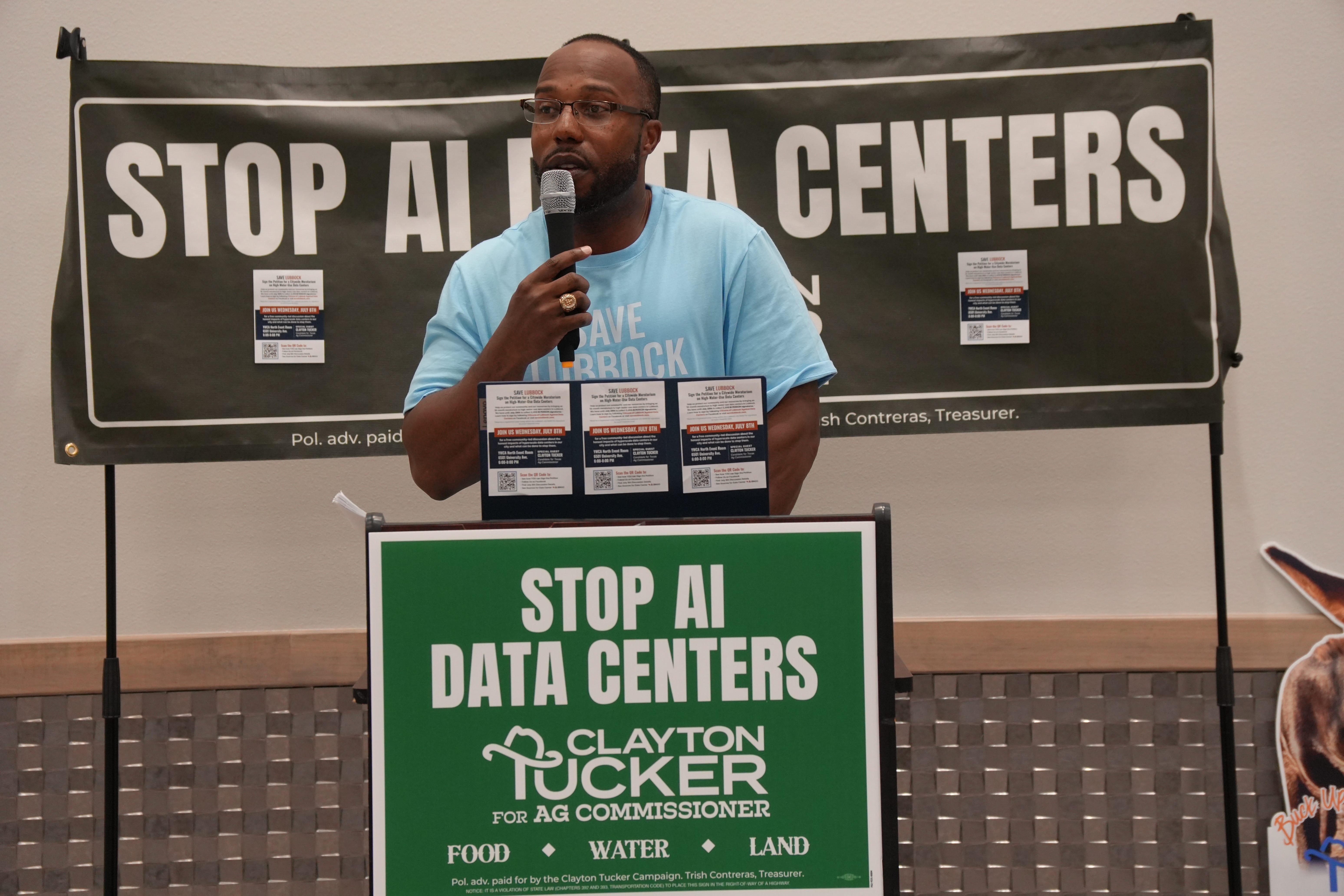
On the evening of 8 July 2026, perennial Mayoral candidate Stephen Sanders sponsored a community forum on Hyper-Scale Data Centers. In attendance were perhaps one hundred and fifty Lubbockites, including Mayor Mark McBrayer, LISD District Two Trustee Mary Ann Lawson, and Mrs. Phyllis Gant of the Lubbock Branch of the NAACP.
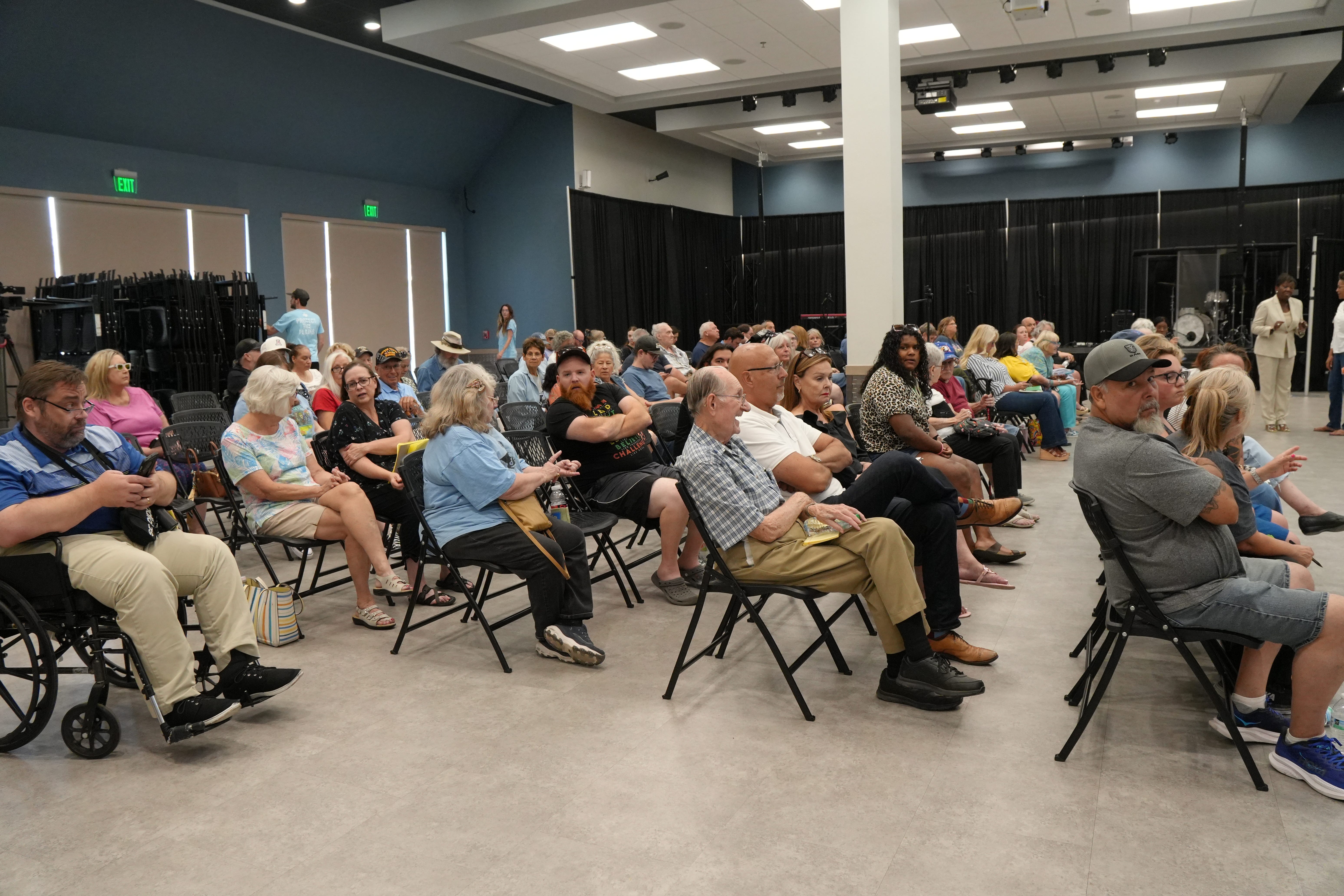
Almost every citizen there was utterly opposed to having any data center built anywhere near our fair, flat city. We know this because at one point, Texas Ag Commission Candidate Clayton Tucker polled the crowd.
No one was in favor of having a data center, and only one or two people said they needed more information.
Stephen Sanders opened the meeting with a prayer, as seems fitting, and then spoke a bit about his position. We had a chance to speak with him before the meeting started.
Stephen Sanders Urges You Sign the Petition
Candidate for Ag Commissioner Clayton Tucker’s Thoughts on Data Centers and Effective Ways to Fight Them.
Most people we’ve heard oppose these facilities on the grounds of excessive water and energy usage, possible harmful effects on human and animal health and reproduction and their possible negative impact on property values and quality of life.
However, we asked Mr. Tucker what were his thoughts on some of the deeper arguments against data centers, like mass-surveillance.
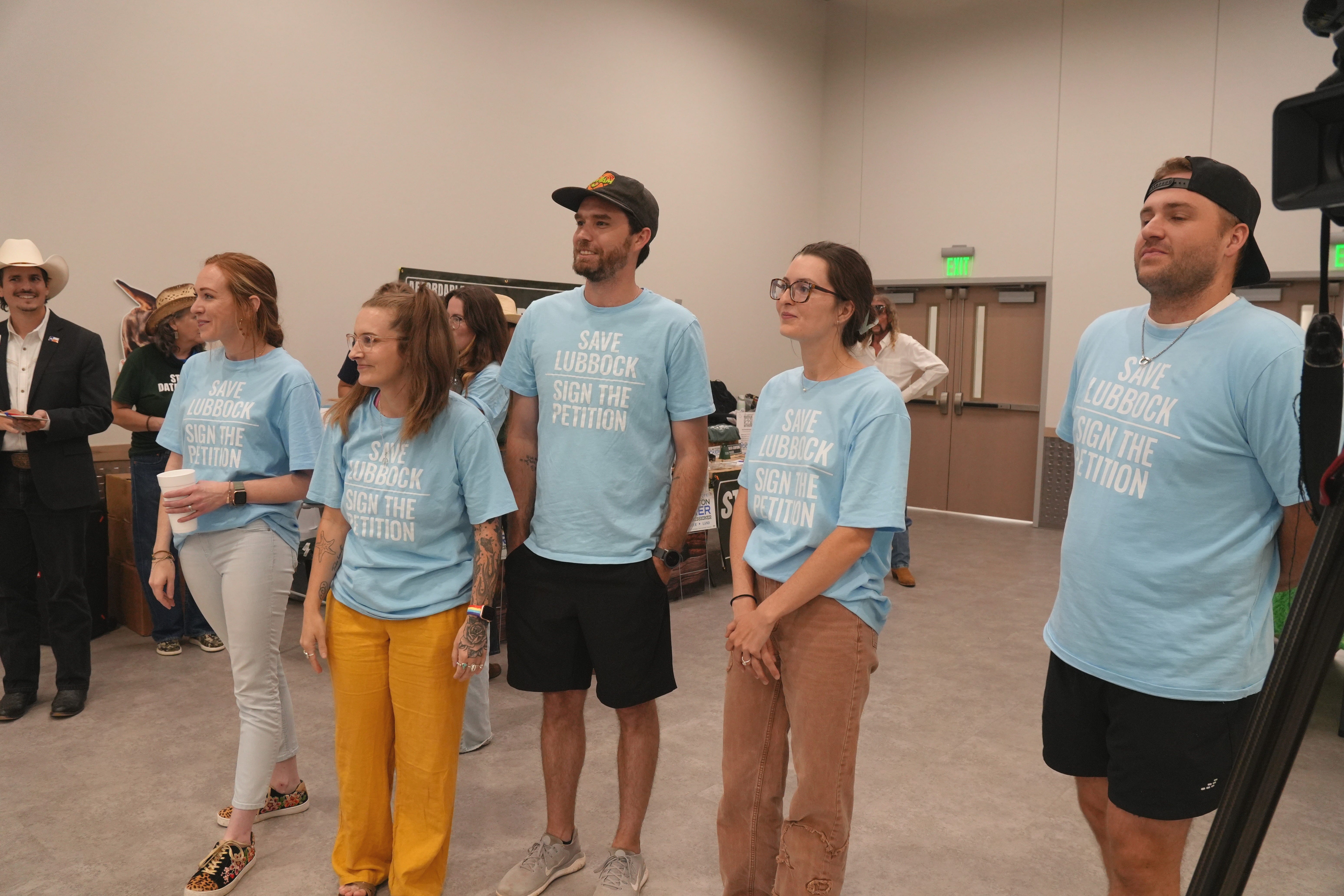
We then listened to a speaker named Hallie Bertrand, who is affiliated with Save Lubbock, the grass roots organization aligned with Sanders to help get signatures on a petition to enact a moratorium on Data Center construction.
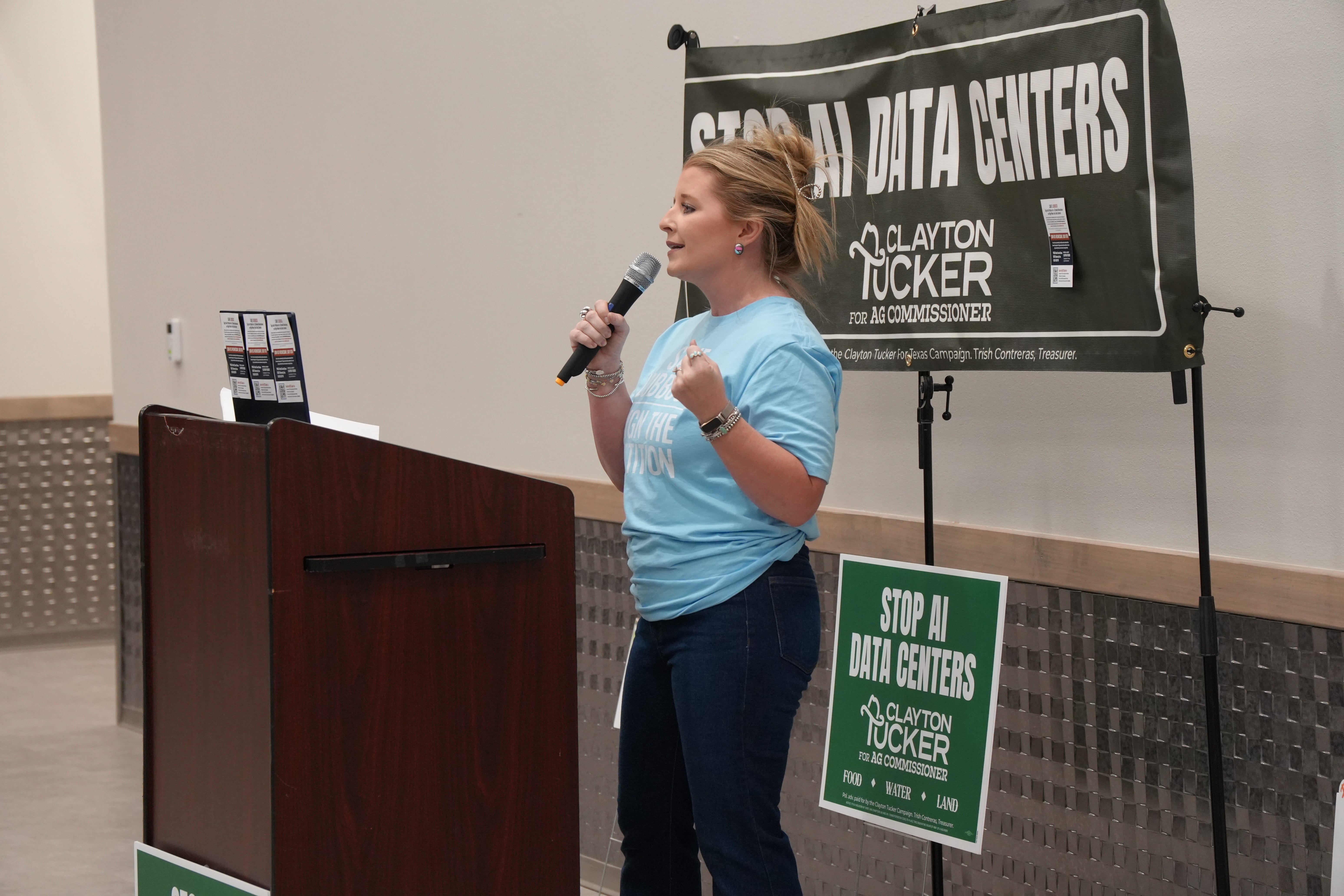
Ms. Bertrand said she grew up in a farming family, and was raised to be a good steward of the land. She described a heartbreaking experience she had where a data center drove many of her friends and neighbors off the land they had long farmed.
Pointless Outbursts Derailed Otherwise Constructive Event
After Mrs. Bertrand and Mr. Tucker spoke, there was a question and answer period where citizens lobbed informal questions at the Tucker, and listened thoughtfully to his answers and proposed solutions.
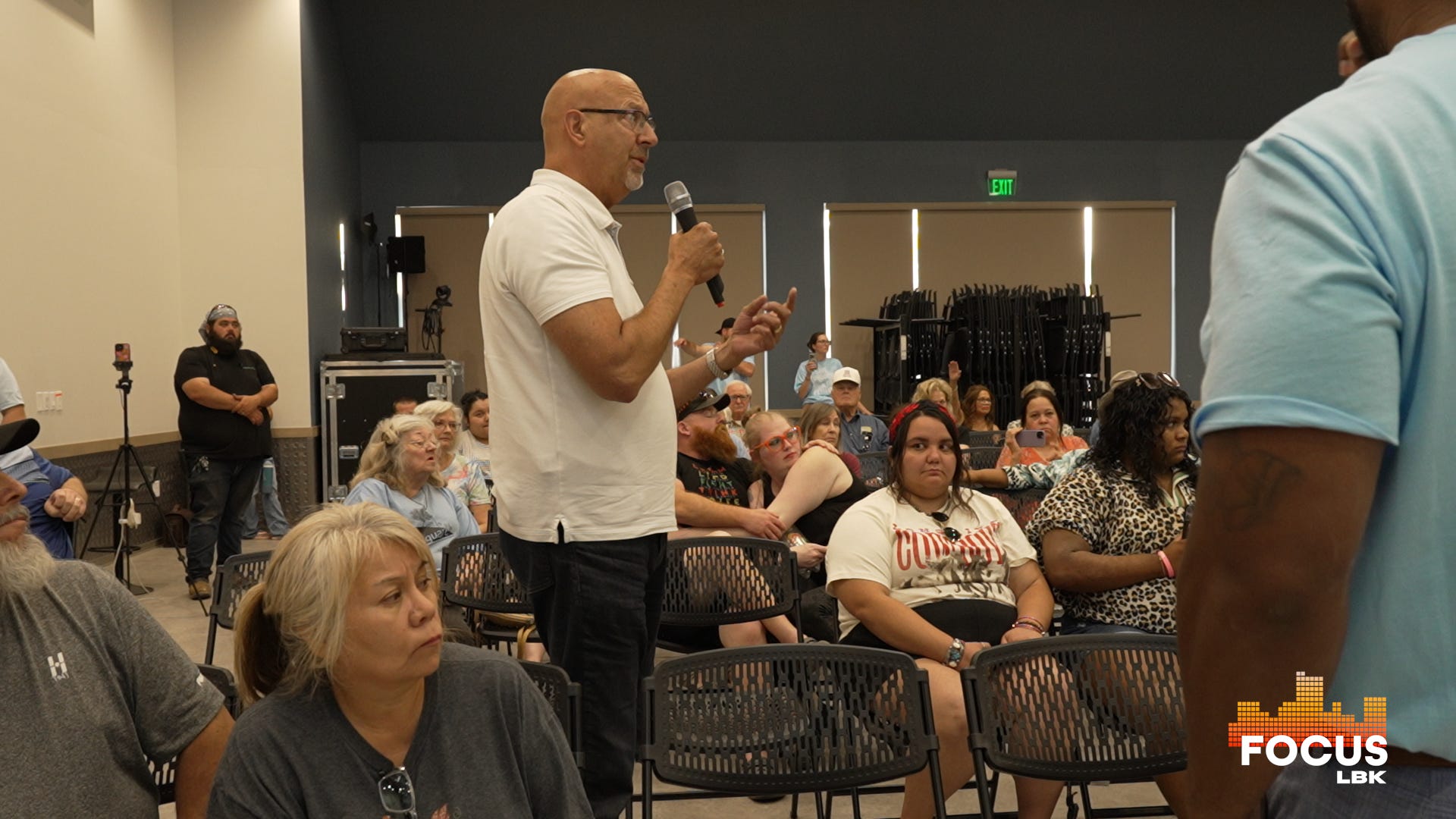
However, near the end of the discussion, Mr. Sanders arranged to have a young lady from the audience ask a question of Mayor Mark McBrayer. Mayor McBrayer agreed to answer, and was in the process of giving what seemed to be an honest, detailed, and contextual response when the meeting spiraled into pointless disruption that ended with Mayor McBrayer declining to proceed in the face of such rude behavior.
Lubbock in a Good Position Compared to other Cities, but Data Centers Pose a Difficult Dilemma
When the meeting officially closed, Mayor McBrayer spoke at some length with a small group of citizens. He said that Lubbock has “benefited from the fact that we’re pretty late in this game. We’ve looked at how everybody else has gone out there and chased them and given away the farm to them and have nothing to show for them.”
McBrayer continued, noting that with other cities there were costs, but no real benefits. “They were, like, we got a data center, we got a data center.” “So what?” “What has it done for you?”
He concluded that because of this, Lubbock could be a bit more sophisticated with how we handled any future data center proposals.
Mayor McBrayer also highlighted a rather sticky dilemma: Lubbock, like any city, can only control data-centers through zoning and other laws IF they are built within city limits.
On the other hand, if Lubbock were to completely reject construction of a data center, all the developers would have to do is go just outside of city limits into the county where there is almost no regulation on resource usage.
He explained that that if they were to build in the county, we would still have all the negatives, plus they would almost certainly tap into the Ogallala Aquifer, which is one of our main underground water supplies.
Conversely, if developers build within city limits, they would probably use municipal water supplies, which mostly come from surface runoff, and could thus be considered less impactful.
Mayor McBrayer seemed genuinely concerned about doing something beneficial for the city when and if another data center proposal is presented to the City Council. Recall that he and the Council shot down a out-of-state datacenter developer several months back.
In that case, Mayor McBrayer said they voted against the proposed data center “because it was going be located in the northeast—partly in the city, partly in the county—too close to residences, and the guy who was building it, couldn’t answer a question.”
He further noted that, “we’re trying to do the best we can, and the zoning we’re proposing is a very restrictive zoning. I think it’s the most restrictive I’ve seen out there in other cities, because, at the end of the day, even if they fit all the zoning, they still have to come to planning and zoning, have hearings, where the public can come, and they will have to come to the City Council for a second vote with hearings and we can vote it down even if they fit all the criteria, if we don’t like like something about it.”
As we conclude, we note that most citizens are against data centers and suspicious of the rapid, seemingly inexorable way they have been rolled out. We strongly “second that emotion” and also fear that those in leadership positions here may be tempted by backroom deals and “meetings before the meeting”.
It is near impossible to know anyone’s heart, or true motivations on any particular subject. However, from what we can see and feel, Lubbock leadership seems to be approaching this matter thoughtfully and a decent amount of circumspection.
In lieu of loud, abrasive outbursts, we resolve to pray for our leadership, and to use any and all constructive, legal means to help them accept The Lord’s guidance and the will of the people.